Feature
The Forgotten Franchise Characters of the Early Arcades
Pac-Man proved a video game character could sell cereal, bedsheets and a Saturday morning cartoon. Every arcade maker wanted one. Most of the attempts are forgotten now.
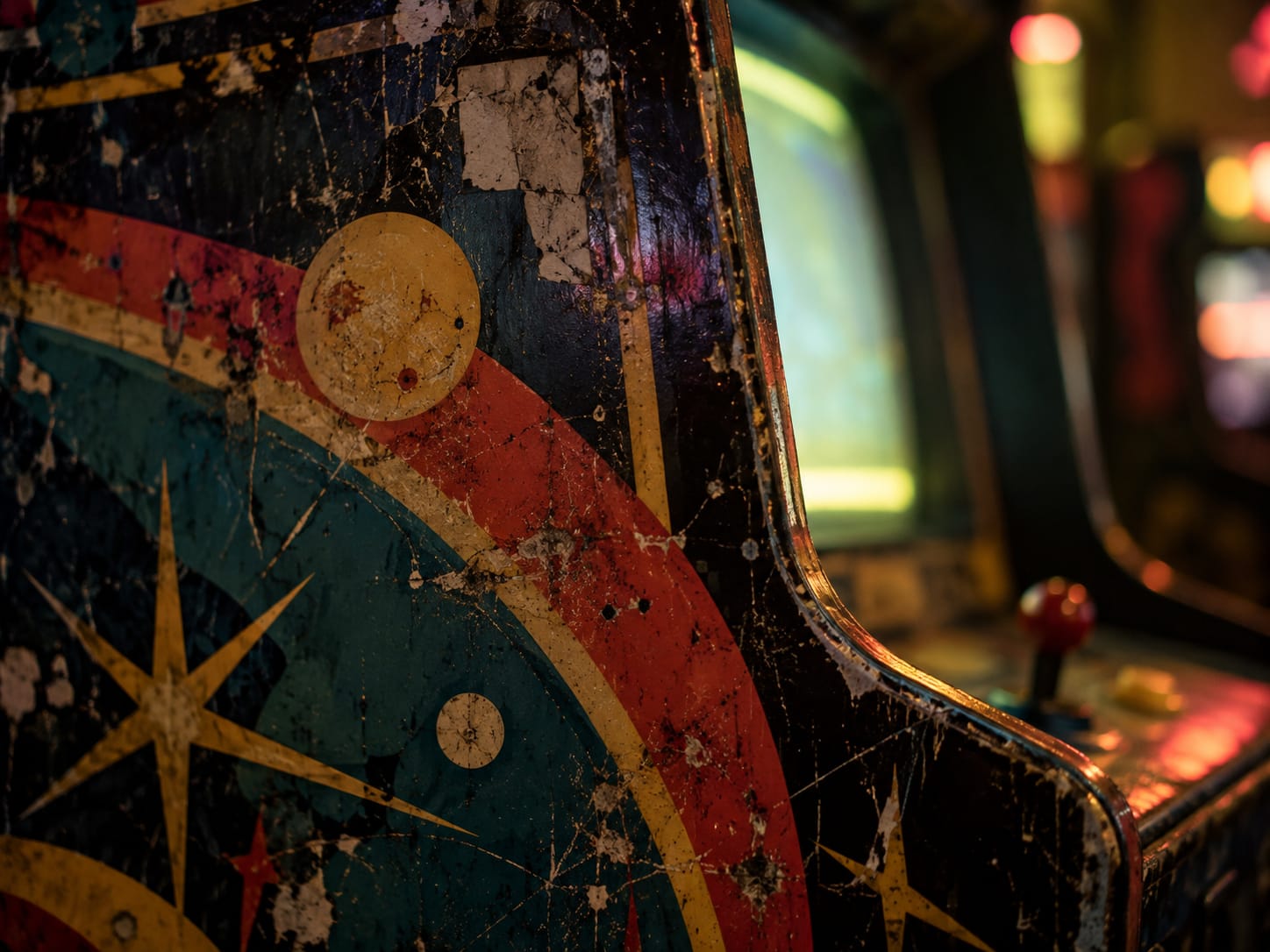
The arcade makers of the early 1980s wanted more than quarters. After Space Invaders and Asteroids came Pac-Man, the first video game character to become a merchandising machine. While players queued at the cabinets, the rights holders collected licence fees from companies that put the yellow maze-eater and his family on cereal, bedsheets, clothes, shoes, lighters, books, plush toys, board games, vitamins and a Saturday morning cartoon. Pac-Man was one of the hottest licences of its time.
Every company saw the opportunity and started looking for its own franchise character: a lasting brand that could support sequels and merchandise. A few succeeded to a degree. Nintendo had Donkey Kong and Donkey Kong Junior, and Gottlieb had Q*bert. For every character that stuck, at least one did not. Here are three that never became household names.
Kapt. Krooz’r
Bally Midway held the North American rights to the Pac-Man arcade game, so its name appeared on most of the Pac-Man merchandise. Namco, which created the game, was not pleased, and the partnership was clearly heading for an end. To keep merchandise income flowing, Midway needed a mascot of its own, and it chose a green alien with an awkward name: Kapt. Krooz’r.
The promotional push was direct. Midway’s materials invoked Pac-Man’s licensing success and suggested its new character would follow. Kapt. Krooz’r appeared in two Midway arcade games released close together, Wacko and Kosmic Krooz’r, both promoted on the TV show Starcade.
It did not work. Both games failed in arcades, and licensing interest went little further than puffy stickers shared with other unsuccessful Midway characters. As the arcade business collapsed in 1983 and 1984, the push stopped, and the captain apparently went back to space for good.
Zeke
Taito had reason to feel overlooked. Its 1978 hit Space Invaders started the arcade boom, expanded the market worldwide and set earnings records. For all that success, it earned comparatively little from licensing, because the invaders were a swarm, not a personality.
Zeke was Taito’s brief attempt at a licensed star. In overalls, a cap and a moustache, he could have been Mario’s father, the same hard-working everyman. To make the difference clear, Taito printed his name on his cap, with a trademark symbol.
Zeke debuted in Zoo Keeper (1982), an underrated Taito arcade game, and later swapped his net for a pickaxe in Zeke’s Peak, a family-friendly version of the Ice Cold Beer novelty cabinet. Promotional kits introduced his girlfriend, Zelda, years before Nintendo used the name, and covered both in trademark symbols. Nothing caught on, and the characters disappeared as fast as they had appeared.
The counterfactual is tempting. If Zeke had become popular, would his resemblance to Mario have ended in court? And with a Zelda already in Taito’s paperwork, what would Nintendo’s adventure classic have been called?
Mr. Do!
Mr. Do! is the strangest case of the three, because by most measures he should be famous.
Universal introduced him in Mr. Do! (1982). The hero began as a plain white bean-shaped figure and was reworked into a colourful clown, possibly to avoid legal trouble with Dig Dug, which also featured a digging character in white. Once Mr. Do! shipped as a conversion kit, the comparison no longer mattered: it went into almost twice as many North American locations as Dig Dug. Play Meter magazine ranked it the seventh-highest-earning arcade game of 1983, a fact that has largely been forgotten.
Universal tried to build a franchise. A game about a knight fighting unicorns became Mr. Do’s Castle (1983), sold as a sequel. Mr. Do’s Wild Ride and Do! Run Run followed, both as conversion kits. The clown appeared on Universal slot machines, the first two games were ported to home consoles and computers, and a Mr. Do! laserdisc adventure was planned.
Despite the earnings, no child wore a Mr. Do! shirt to school, and there was no cereal and no cartoon. By the end of the 1980s the series had almost vanished, remembered as a footnote. Later ports came for the Game Boy and the Super Nintendo, plus an updated Neo Geo version, but the character mostly faded back into the dirt he dug through.
The ones who did not make it
None of these characters will be mentioned alongside Pac-Man, Mario or Angry Birds. Each was pushed hard for the same kind of success.
Had even one of them broken through, the clown, the alien or the man with his name on his cap, the list of famous game mascots would look rather different.