Feature
Bless Us With Blood: Bloodborne and the Horror of Childbirth
Bloodborne's debt to H.P. Lovecraft is well documented. Its debt to the gothic, and to the female gothic in particular, runs deeper and says more about what the game is really afraid of.
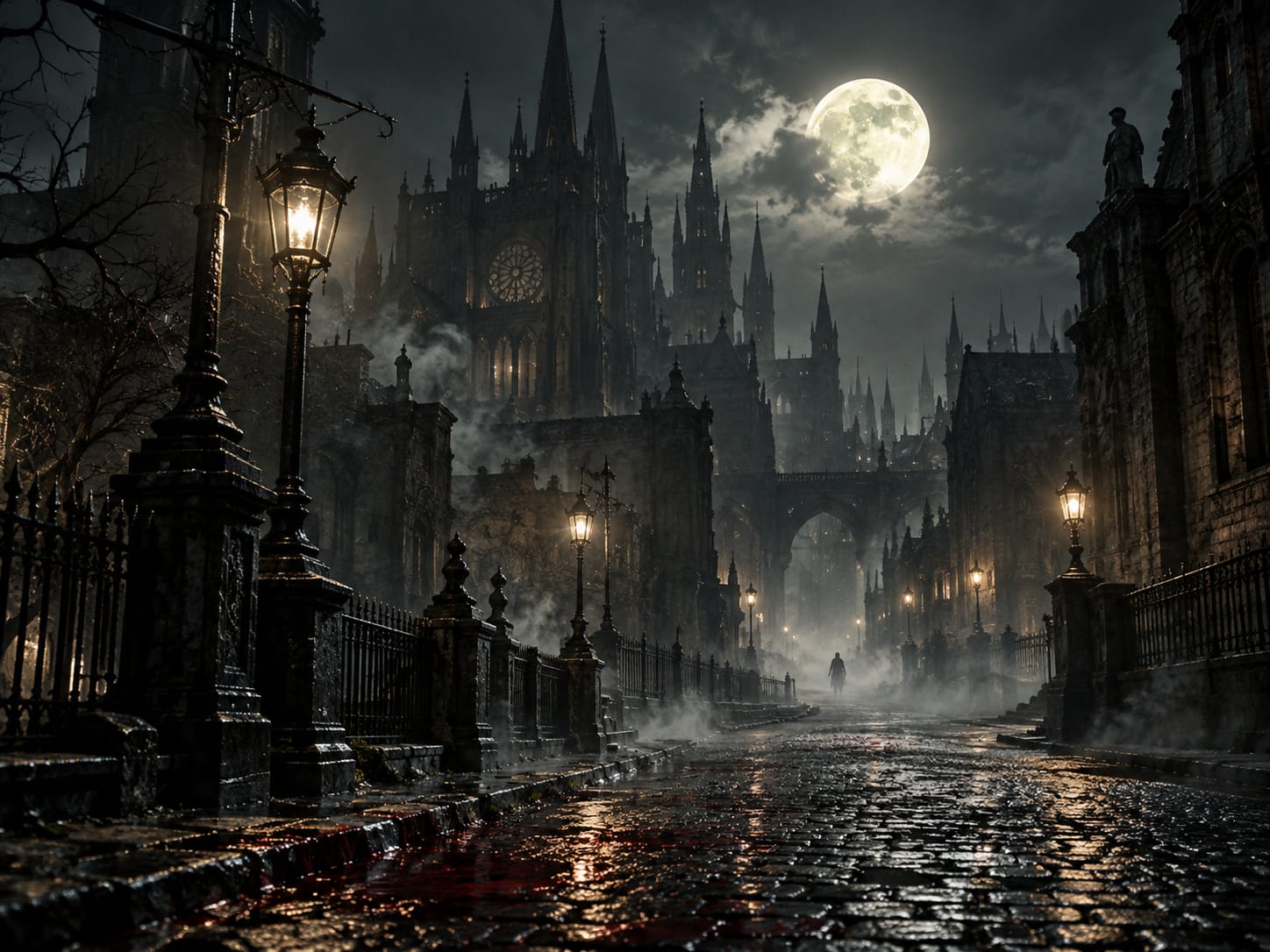
Bloodborne’s Lovecraft influence has been discussed at length. Far less attention goes to what it takes from the older gothic tradition, which Lovecraft himself tried to leave behind. In Supernatural Horror in Literature he dismissed the classic gothic tale as “tedious, artificial and melodramatic”, weighed down by a style that never allowed a truly weird atmosphere. His alternative was cosmic horror: an evil lurking just behind visible reality, always ready to break into the everyday.
Bloodborne also attacks the player’s nerves on a psychological level. Its gothic inheritance goes beyond cathedrals and cobblestones, though. It sits somewhere much more intimate.
Blood as birth
In gothic fiction, blood usually means the vampire: a symbol carrying monstrosity and humanity at once. Bloodborne widens the symbol to include the blood of birth, menstrual and maternal. Master Willem puts it most clearly: “We are born of the blood, made men by the blood, undone by the blood.” The blood that brings people into the world also carries the power to unleash new horrors.
That idea links the game to Mary Shelley’s Frankenstein and to childbirth as something sublime, beautiful and terrifying at once. It also links Bloodborne to the female gothic. Ellen Moers introduced that term in 1976 for fiction that encodes women’s fears of being trapped in the home and in the body, fears felt most sharply in childbirth. Victorian domestic life, which kept women repressed, submissive and valued mainly for bearing children, supplied plenty to fear. Bloodborne’s occult mythology, soaked in blood, sets aside the conventional ghost story and pursues the psychological and physical horror of birth instead.
Born into Yharnam
Seek the old blood. But beware the frailty of men. Their wills are weak, minds young.
Yharnam’s streets run with the blood of men and beasts, but the blood that matters most is the blood of birth. Blood ministration, the city’s cure-all in which citizens take in the blood of a Great One, resembles the exchange of blood between mother and child. It heals, and it brings superhuman strength and speed. Yharnamites come to depend on it, as a child in the womb depends on its mother’s blood.
The player is not spared either. The hunter arrives through a blood transfusion, a birth into Yharnam’s streets. The game keeps returning to menstruation and to the moon, the body by which months are counted. Progress follows the phases of the moon until the blood moon rises, and a note in Byrgenwerth explains what that moon brings: the Great Ones descend, and a womb is blessed with child.
Blood can heal, strengthen and create monsters. After the discovery of the Old Blood, the Byrgenwerth scholars argued over how it should be used, and whether it “makes us more than human”. Since the blood of the Great Ones passes through the mothers who carry their children, the real power in Yharnam does not belong to the Healing Church or the hunters of the Hunter’s Dream. It belongs to the people who give life. Through that double meaning of blood, the game sets the urge to create life directly against the urge to destroy it.
Mary Shelley’s shadow
For the tangle of birth and death, the obvious guide is Mary Shelley. In Frankenstein, Victor wants to “bestow animation upon lifeless matter” and robs graves and morgues to do it. Shelley’s own experience of childbirth was also shadowed by death. After losing her first baby she wrote in her journal: “Dream that my little baby came to life again; that it had been cold, and that we rubbed it before the fire, and it lived.” Biographers have traced how her anxieties grew in later pregnancies, including the fear of whether she could love a child born wrong. Bloodborne takes hold of that deep maternal fear and turns it into a nightmare.
A nightmare is born
Every Great One loses its child, and then yearns for a surrogate.
Yharnam has gone beyond talking with the Great Ones. “When the red moon hangs low, the line between man and beast is blurred. And when the Great Ones descend, a womb will be blessed with child.” The red moon points to the Moon Presence, whose defeat truly ends the nightmare, and to the cycles of menstruation and pregnancy in the women who were chosen. Women who communed with the Great Ones bore their children, and those children are the source of the nightmare. They must be silenced “lest the night carry on forever”. Yharnam’s nightmare was not born of a Great One. It was born of a woman.
Arianna shows the cost. After giving birth to a swollen, tentacled creature, she can only bury her face in her hands: “It can’t be… this is a nightmare.” Historical studies of infant mortality in Victorian Britain record painfully high rates of death. To survive those odds only to bear something monstrous would push anyone towards madness. Bloodborne lets that hidden maternal dread spread until it becomes, literally, the Nightmare of Mensis.
Lovecraft called fear of the unknown humanity’s “oldest and strongest” fear. Few unknowns are as frightening as the possibility of giving birth to a monster. Every monster, fictional or real, had a mother. Every new life carries the possibility of a new evil. When the hunter silences the infant Great One Mergo, the screen does not show the usual “Prey Slaughtered”. It shows “Nightmare Slain”. The source of Yharnam’s horror was a newborn.
Fear the old blood
Fear the old blood.
Bloodborne’s cosmic horror is less about what waits among the stars than about what might come out of one’s own body. The creature design commits to body horror, twisting human shapes into grotesque forms, and director Hidetaka Miyazaki has described the beasts in terms of an inner conflict, the urge to transform. The fear of the unknown turns inward, onto the body itself.
The game takes the best of Lovecraft. Insight lets the player peel back the surface of reality, and frenzy makes psychological damage as dangerous as physical damage. What sets Bloodborne apart from countless Lovecraftian works is how directly it ties cosmic dread to ordinary human fears.
New parents read shelves of books about what to expect, hoping their children will grow up to change the world. Bloodborne remembers that a child can change the world in the other direction too.
Sources
- Lovecraft, H.P. Supernatural Horror in Literature.
- Shreffler, Philip A. The H.P. Lovecraft Companion. Greenwood Press, 1977.
- Stephanou, Aspasia. Reading Vampire Gothic Through Blood. Palgrave Macmillan, 2014.
- Smith, Andrew, and Diana Wallace. “The Female Gothic.” Gothic Studies, 2004.
- Moers, Ellen. “Female Gothic”, in Literary Women, 1976.
- Vicinus, Martha. Suffer and Be Still: Women in the Victorian Age.
- Shelley, Mary. Frankenstein; or, The Modern Prometheus, 1818.
- Schor, Esther, ed. The Cambridge Companion to Mary Shelley. Cambridge University Press, 2003.
- Millward, Robert, and Frances Bell. “Infant Mortality in Victorian Britain: The Mother as Medium.” The Economic History Review 54.4 (2001): 699–733.
- FromSoftware. Bloodborne. Sony Computer Entertainment, 2015.