Feature
Vintage Video Game Collecting: Four Myths About the Hunt Today
Online, the story is that retro game hunting is dead: no finds, too many collectors, scalpers everywhere, eBay ruined it. Compared with the 1990s, the basics have barely changed.
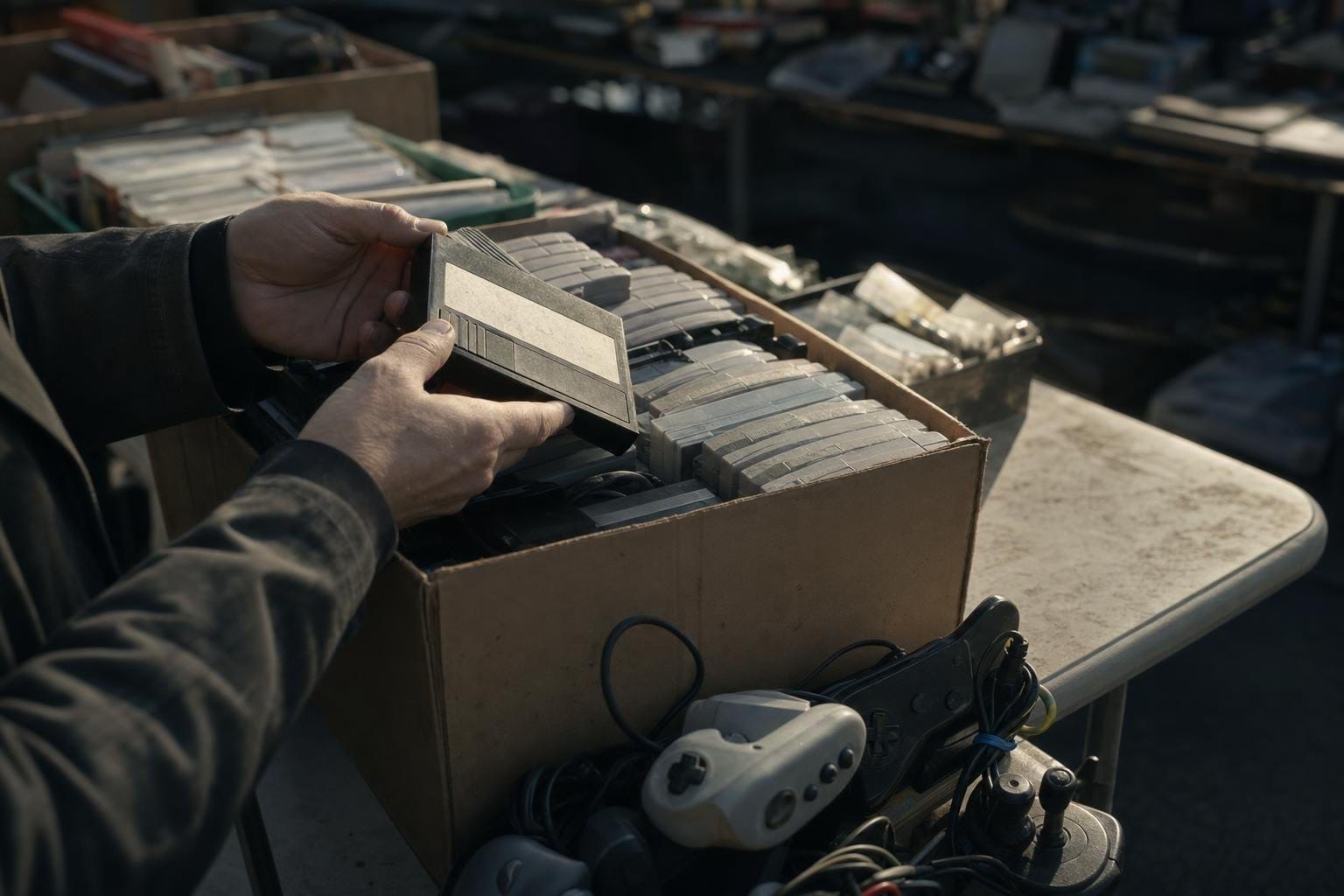
Social media posts and YouTube videos often describe retro game collecting as ruined: nothing left to find, too many people looking, scalpers pushing prices up, eBay killing the hunt. Anyone who hunted for games in the 1990s will recognise most of today’s market. The places to look have changed. The basics have not.
Here are four common claims, and how they hold up.
Claim: there are no good finds in the wild anymore
Verdict: false.
Good finds still turn up regularly, even in areas crowded with collectors and resellers, often the same people who insist the well is dry. What has changed is how and where to look, not the market itself.
Thrift stores, flea markets and garage sales no longer produce vintage games the way they once did, because most people who clear out that way have already done so. Those outlets are mostly full of things ten years old or less, and always have been. True hoarders rarely donate or hold yard sales, and regular spring cleaners got rid of their old consoles long ago.
The same is true of every other collectible from the 1970s to the 1990s. NES cartridges are rare at yard sales now, but so are old records and VHS tapes, vintage Star Wars and Transformers figures, and parachute pants. The answer is not that the supply has vanished. It is to look somewhere else.
Claim: more people are collecting now
Verdict: false.
What collectors want has changed; how many of them there are has not, in proportion.
In the 1990s, hunters wanted Atari, ColecoVision and Intellivision hardware, and early home computers such as the TRS-80 and early Apple machines. They had no interest in 8-bit and 16-bit cartridges, which were still recent. A used NES game in 1998 was what a used Xbox 360 game was in 2017: something to pick up at Funcoland the way recent games could be found at GameStop.
Over time supply dried up and a generation reached the age where nostalgia drives demand. Every collectible goes through that cycle, and collectors of any other kind of pop culture will describe the same pattern.
It feels as if more people are looking because more people want the same things, and because social media makes every other collector visible. In the 1990s a collector only knew the people met locally, at swap meets and at auctions.
Claim: resellers and scalpers raise prices
Verdict: false.
“Reseller” and “scalper” are used as insults, but anyone who sells or trades a game for more than they paid is reselling. Nobody who finds Little Samson for $5 will pass it on for less than market value, and nobody would leave a stack of Stadium Events cartridges for the next person.
Supply and demand only work when buyers and sellers agree. A product priced above what buyers will pay does not sell, and its price has to drop. That happens on Amazon, at every Walmart and Target, and in the housing and car markets. If people will pay $20 for an old Atari cartridge, sellers will ask $20. Resellers do not set the price; they take advantage of it.
Claim: eBay ruined the hunt
Verdict: false.
Anyone can check a game’s market value on eBay in seconds. That is not new. In the 1990s the reference was the Funcoland price list, printed monthly with a price for every game the chain sold, and pawn shops and yard sellers would often pull one out before quoting a price.
If anything, eBay has kept prices lower for everything but the rarest games. Before it, collectors at conventions had to buy from whoever was in the room. eBay turned a regional market into a worldwide one, and sellers suddenly had to compete with dozens of others. Few buyers pay $30 for a game they can find there for $10, just as high-street shops struggle against Amazon.
eBay did not invent resellers either; it only gave them a platform. Newspaper classifieds in the 1980s and 1990s were full of people reselling whatever was in demand, from baseball cards to Cabbage Patch Kids to Tickle Me Elmo. Games were part of it too, most memorably Super Mario Bros. 2 and Zelda II: The Adventure of Link when they were scarce and wanted during Christmas 1988.
The NES Classic resale frenzy looked bad, but the PlayStation 2 launch in 2000 was worse, with consoles selling for thousands of dollars. eBay did not cause that frenzy; if anything, it helped prices fall back within weeks. Without it, most games that are not truly rare would cost more, because buyers would be limited to what their own region happened to supply.
The hunt is the same
Driving from place to place to see what turns up is still the same pleasure it was decades ago, and easier for collectors who can now afford what they find. The places to look have moved, and prices are easier to check, but the hunt itself has not changed. The online pessimists are wrong.
Questions readers ask
Where can you still find vintage video games in the wild?
Less often at thrift stores, yard sales and flea markets, which mostly carry items under ten years old. Collections tend to surface through other routes, such as estate sales, auctions, pawn shops and local networks of collectors.
Do resellers raise retro game prices?
Not on their own. Buyers set market value: a game priced above what people will pay does not sell and has to come down. Resellers profit from demand but cannot create it.
Did eBay make retro games more expensive?
For most games, the opposite. eBay turned regional markets into one worldwide market, which increased competition between sellers and pushed prices down on everything except genuinely rare titles.