Feature
A Gamer Looks at 40, Part One: Atari 2600 to the Arcade Revival
A generation born in the late 1970s met games in the living room, lost its quarters in the arcade and picked a side in the first console war. This is how those years looked.
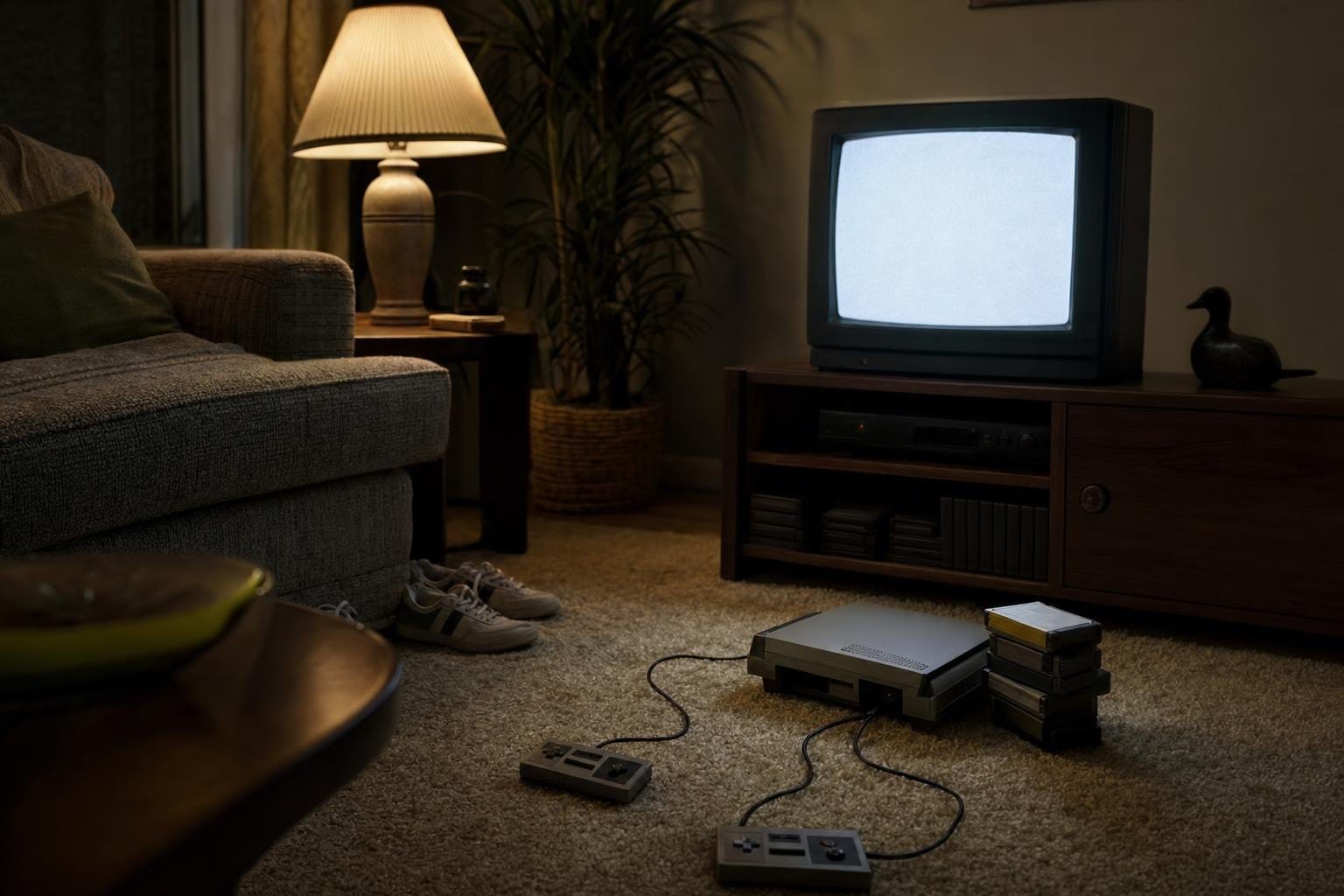
Anyone who turned 40 in 2017 has lived through almost the entire history of home video games. A child born in 1977 was five when the Atari 2600 was in millions of living rooms, ten when the Nintendo Entertainment System took over, and a teenager when Street Fighter II filled the arcades again. Part one follows those years, from first contact to the end of high school in 1995.
1982: the living room
For many families the first console arrived second-hand or half-broken, and the household electronics tinkerer opened it up before anyone played it. The Atari 2600 came with a black joystick and a single orange button, and the game everyone remembers is Space Invaders.
That first evening usually ended the same way: a parent calling bedtime while Earth was still under attack. It was the beginning of a long negotiation over screen time.
The 2600 was everywhere. School playgrounds traded stories about Asteroids, Pitfall! and a large ape throwing barrels at a carpenter with a hammer, the first appearance of the character who would become Mario. A generation of players was forming, and it wanted more than the living room could give.
1984: the arcade
The arcade was the answer. A corner of a shopping mall, loud and lit, full of cabinets and teenagers, smelling of cigarette smoke and hairspray. Four quarters went quickly. Kung-Fu Master could end a run inside a minute and a half; Q*bert, hopping around a coloured pyramid and dodging a snake, was more forgiving to a seven-year-old.
The scale of that business is hard to picture now. Arcade revenue in the United States was estimated at close to $8 billion in 1982, more than the music and film industries earned that year.
Historians such as Steven L. Kent, in The Ultimate History of Video Games, date the decline of the golden age of arcades to 1983. The decline was uneven. In smaller towns with little else to do, arcades kept going well into the late 1980s and stayed the main social space for teenagers.
1987: the NES
The NES arrived in many homes the way big presents did: as a once-in-a-childhood purchase. The Action Set, with Super Mario Bros. and Duck Hunt and the Zapper light gun, was the version to ask for.
Then came the library. Rad Racer, Blaster Master, Ikari Warriors, Maniac Mansion and hundreds more, traded between friends and rented whenever the shop had a copy. Across the life of the NES and the Japanese Famicom, Nintendo sold around 500 million cartridges, an attach rate of more than eight games per console.
The first console war
The early 1990s forced a choice between the Sega Genesis and the Super Nintendo. Many players went with Sega because of a game that has not aged well, Altered Beast, and stayed for the sports titles. NBA Jam and NHL games turned the couch into a two-player rivalry, often between parent and child.
By sales the war was not close. The Super Nintendo sold around 49 million consoles to the Genesis’s 30 million. But nobody who spent those evenings with a Genesis remembers the sales figures. The memories belong to the games and the people playing them.
The fighting game boom
The Genesis led many players to fighting games. Super Street Fighter II and Mortal Kombat at home were practice for the real thing, which was back in the arcade. Fighting games brought a second wave of arcade life in the early 1990s. Saturdays went into practising Dragon Punches and trying to reach Shao Kahn before the quarters ran out.
1995: leaving home
For a player born in 1977, high school ended in 1995. That year the PlayStation and the Sega Saturn reached the US, and a new generation of 3D games was about to begin.