Review
Farming Simulator 19 Review: John Deere, Weeds, Lime and Multiplayer with Separate Farms
GIANTS Software promised a new engine, new crops, horses, buildable farms and a rebuilt multiplayer. Almost all of it landed, and the result is the strongest game in the series.
Released November 20, 2018Reviewed on PCAlso on PlayStation 4, Xbox OneDeveloper GIANTS SoftwarePublisher Focus Home InteractivePrice at launch $34.99 USD (PC/Mac), $49.99 USD (consoles)
Farming Simulator 19 went to market with the tagline “Farm Like Never Before”, and GIANTS Software listed an unusually long set of changes to back it up: a rebuilt graphics engine, new crops and field management, horses, a dog, a revamped contract system, farms built from nothing, and a multiplayer mode where every player can own a separate operation. That is a lot to attempt in one release. Nearly all of it works. A few bugs and one badly explained building system hold it back, but this is the most complete farming sim GIANTS had made, and this Farming Simulator 19 review goes through it part by part.
More than 300 machines, and finally John Deere
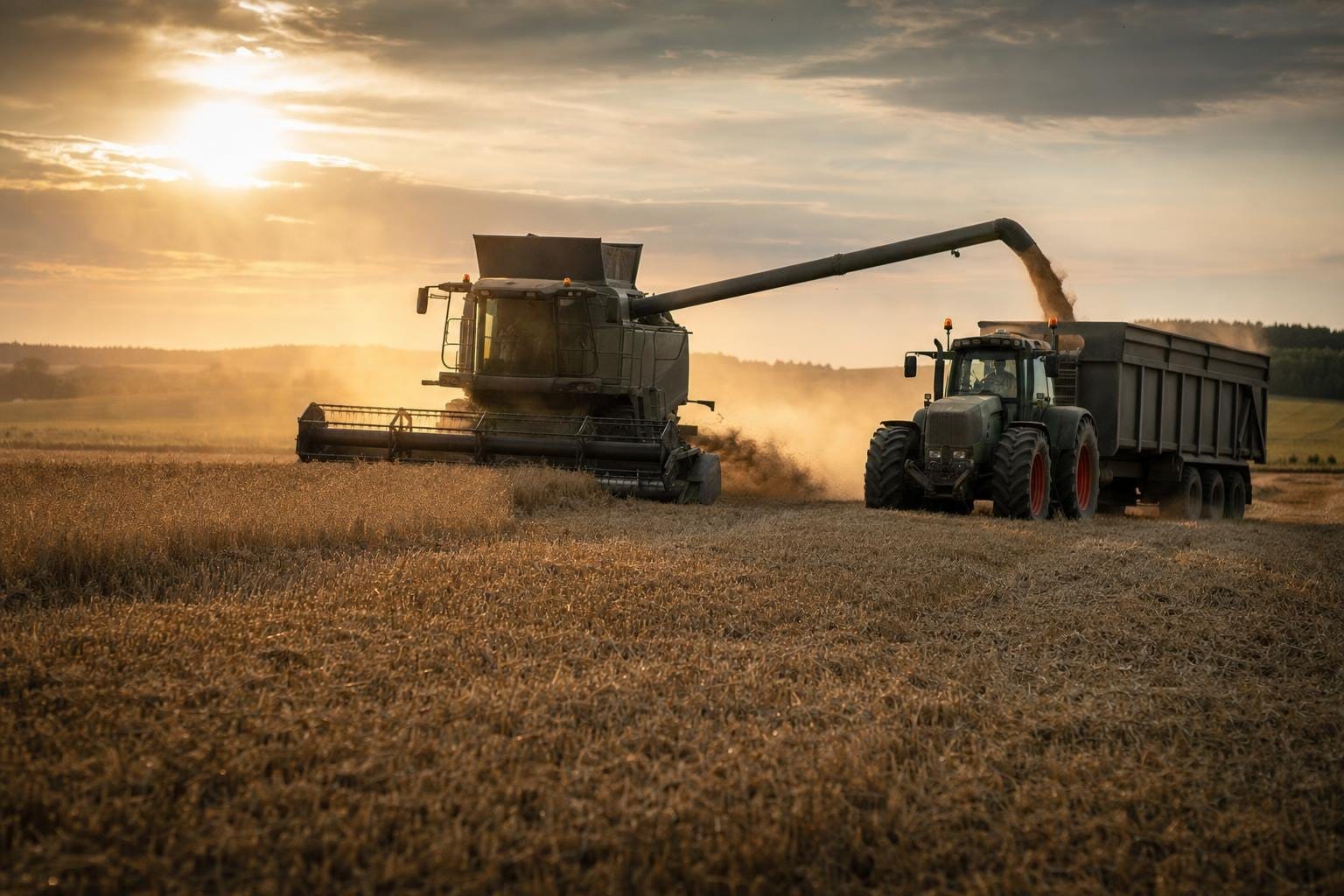
The garage is the largest in the series: more than 300 vehicles and tools from over 100 brands, each modelled closely on the real machine. The headline is John Deere. Players had asked for the green and yellow machinery in the base game for years, and with it on board every major manufacturer is represented. Brand loyalty matters less than choice, and the choice now resembles a real dealership.
Mods were confirmed for every platform. GIANTS itself prepared the Estancia Lapacho map from the Farming Simulator 17 Platinum Edition and the Big Bud tractors as mods for launch.
On the mid-range PC used for this Farming Simulator 19 review, the game runs well. The highest preset (“very high”; there is no “ultra”) sits between 45 and 60 frames per second, and one step down to “high” holds a steady 60 with little visible loss. Wheel and pedal mapping is straightforward. An early bug that failed to save some control settings was fixed in a post-launch update.
Three ways to start
The old Easy, Normal and Hard settings are gone. In their place come New Farmer, Farm Manager and Start from Scratch. Commodity prices still drop as difficulty rises, but the bigger difference is what the player owns on day one: two of the three modes begin with no land, no buildings and no machines, and with starting money that is partly a bank loan.
There are two new maps. Ravenport mixes the US West Coast with the American South; Felsbrunn reads as a European farming region beside a working port. Both have well-placed sell points, varied fields and forest. Ravenport’s roads are tight for the largest machines and take some getting used to, but neither map is a weak choice. Character creation also has more options than before, which matters because the farmer is on screen whenever the camera is outside the cab.
The new engine
The engine overhaul is obvious. Vehicle models catch the light far more convincingly, and the clouds, sped up with the time controls, form and drift across the sky like a time-lapse. There are trade-offs. The far landscape is slightly blurred to save processing for nearby machinery, and vegetation pops in at the edge of a fixed radius around the player. That radius existed in Farming Simulator 17, but the sharper scenery inside it makes the boundary easier to see, especially on lower settings with reduced draw distance. Soil and crop textures improve only modestly and vary from field to field.
The heads-up display was redrawn as transparent gauges in place of black boxes. It takes up less of the screen, and only occasionally becomes hard to read against a light background.
Small things that sell the farm
The shop was rebuilt with a preview of every machine, colour and wheel option before purchase, and each paint option names the brand it comes from. The new category layout takes a few minutes to learn.
Dozens of smaller additions push the realism further. Birds land in fields and scatter as a tractor approaches. Dust rises from dirt tracks. PTO shafts and hydraulic hoses appear when an implement is attached. Combine cutter bars move, and the packer behind a disc harrow keeps spinning once it is lifted. Dashboards light up at night, and in-cab screens show engine speed, ground speed and cruise control in real time. Outside the cab, the driver bounces on the seat suspension and visibly works the pedals and wheel.
A farmhouse lets the player sleep from 2 to 11 hours, running the clock at 5000x through the night. That also makes slower crop growth practical without stretching real playing time.
Daily maintenance costs were replaced by wear and tear: older machines get scratched and use more fuel, and need repair at the shop or at a placeable workshop. Resetting a vehicle to the shop now returns it with an almost empty tank, which ends the habit of resetting a tractor just to collect an implement. One expected feature, manual gearboxes, did not make it into the release.
Weeds, lime and two new crops
The core loop has not changed in ten years: cultivate, sow, fertilise, harvest, sell. Each release adds steps, and this one adds two that real farms deal with.
Fields now need fertiliser twice rather than three times, plus plowing every third harvest (which can be switched off). New are weeds, which appear after sowing and must be removed with a mechanical weeder or herbicide before the crop is fully grown, and lime, which must be spread periodically. Missing either cuts the yield. Maximum yields are no longer a given from the start, especially on harder modes where the extra machinery is expensive, and that gives every purchase more purpose.
Sprayers, spreaders and seeders can now be unloaded onto pallets, so one machine can switch between jobs. Walking up to a field opens a Field Info panel with its owner, crop, growth stage, fertiliser and weed levels, and plowing and lime needs. Opening the same panel from the map would have helped when choosing land to buy; the map filters still cover it.
Oats behave like wheat and barley. Cotton is a separate investment: a dedicated harvester, a special trailer that carries one or two modules at a time, and storage space, since loaders cannot lift the modules.
Buying land and building a farm
Land is now sold as whole parcels, trees and open ground included, and nothing on land the player does not own can be mowed or cut. Animals no longer have fixed pens. Each species has two sizes of enclosure that can be placed anywhere on owned land, along with silos and silage bunkers.
The freedom is welcome. The execution is the game’s weakest part. Placement automatically levels the ground, which on a gentle slope leaves a building sitting on a short, steep ridge that machinery struggles to reach. Terrain work is also charged as construction cost: a large chicken coop listed at $40,000 can cost more than $133,000 once placed on ground that looks flat. The projected cost appears only in the help panel, and the option to raise or lower a building before placing it is easy to miss. Charging for earthworks is realistic. The size of the charge, and how poorly the game explains it, are not.
Horses, forestry and contracts
Horses are the new animal. They have to be ridden every in-game day to raise their grade and value, and their animation is excellent. Other livestock care works as in Farming Simulator 17.
Forestry adds Komatsu felling and forwarding machines and a MAN truck with a crane, alongside the returning PONSSE equipment. An optional boom assist reduces the button combinations cranes require, which helps newcomers.
The contract system improved a great deal. Jobs can be done with the player’s own machines or with borrowed ones for lower pay, and the time limit is gone: a long harvest contract can be left, saved and resumed without penalty. Transport contracts, absent from Farming Simulator 17, are back. A hired worker can finish a contract, though doing the whole job that way earns nothing.
Multiplayer with separate farms
This is the biggest change in the release. In earlier games one player held the money and everyone else worked for a shared farm. Now each player can run a separate farm with its own land, machines, buildings, animals and bank account. Friends can still share one farm, compete to earn the most, or specialise: one raises cattle, another breeds horses across the map, a third only bales hay and sells it to the others. With separate farms, a shared map finally works like a small rural economy.
Contractor status lets a farm owner allow another player to work their fields with their own machines or the owner’s. Permissions change instantly, even mid-task. Contracts also work in multiplayer now.
Joining a server takes a short sync, and creating a server froze a couple of times early on. A long-standing complaint is fixed: the game lists the mods a server needs before joining and links straight to the ModHub to download them.
Farming Simulator 19 review: the verdict
The short answer of this Farming Simulator 19 review: it is the best entry in the series at release. The engine, weeds and lime, the contract changes and above all separate farms in multiplayer move it forward. Nothing in it is a step backwards. The building cost system needs clearer explanation and lower prices, and a handful of visual glitches remain: flickering mirrors, grass clipping through low vehicles, and tree cover on Ravenport that hides the road.
Who it is for: anyone who enjoys the slow work of running a farm, and especially groups of friends who want to share a map without sharing one bank account. Who should wait: players looking for a game first and a simulation second. It is still about driving machines across fields, just in far more detail than before.
Questions readers ask
What platforms is Farming Simulator 19 on?
It launched on November 20, 2018 for PC and Mac, PlayStation 4 and Xbox One. Launch prices were $34.99 USD on PC and Mac and $49.99 USD on consoles.
Does Farming Simulator 19 have John Deere?
Yes. Farming Simulator 19 is the first game in the series with licensed John Deere machinery in the base game, alongside more than 300 vehicles and tools from over 100 brands.
Can players have separate farms in Farming Simulator 19 multiplayer?
Yes. Each player can run a separate farm with its own land, machines, buildings, animals and money. Farm owners can grant other players contractor status so they can work on fields they do not own.
What are the new crops in Farming Simulator 19?
Cotton and oats. Oats use the same machines as wheat and barley. Cotton needs its own harvester and a dedicated trailer for the round modules it produces.