News
Farming Simulator 19 Fact Sheets #10 and #11: L218, Valtra, BiG M
The weekly equipment reveals continue with a skid steer loader, a customisable Valtra pulling a Kuhn manure spreader, and the return of the Krone BiG M self-propelled mower.
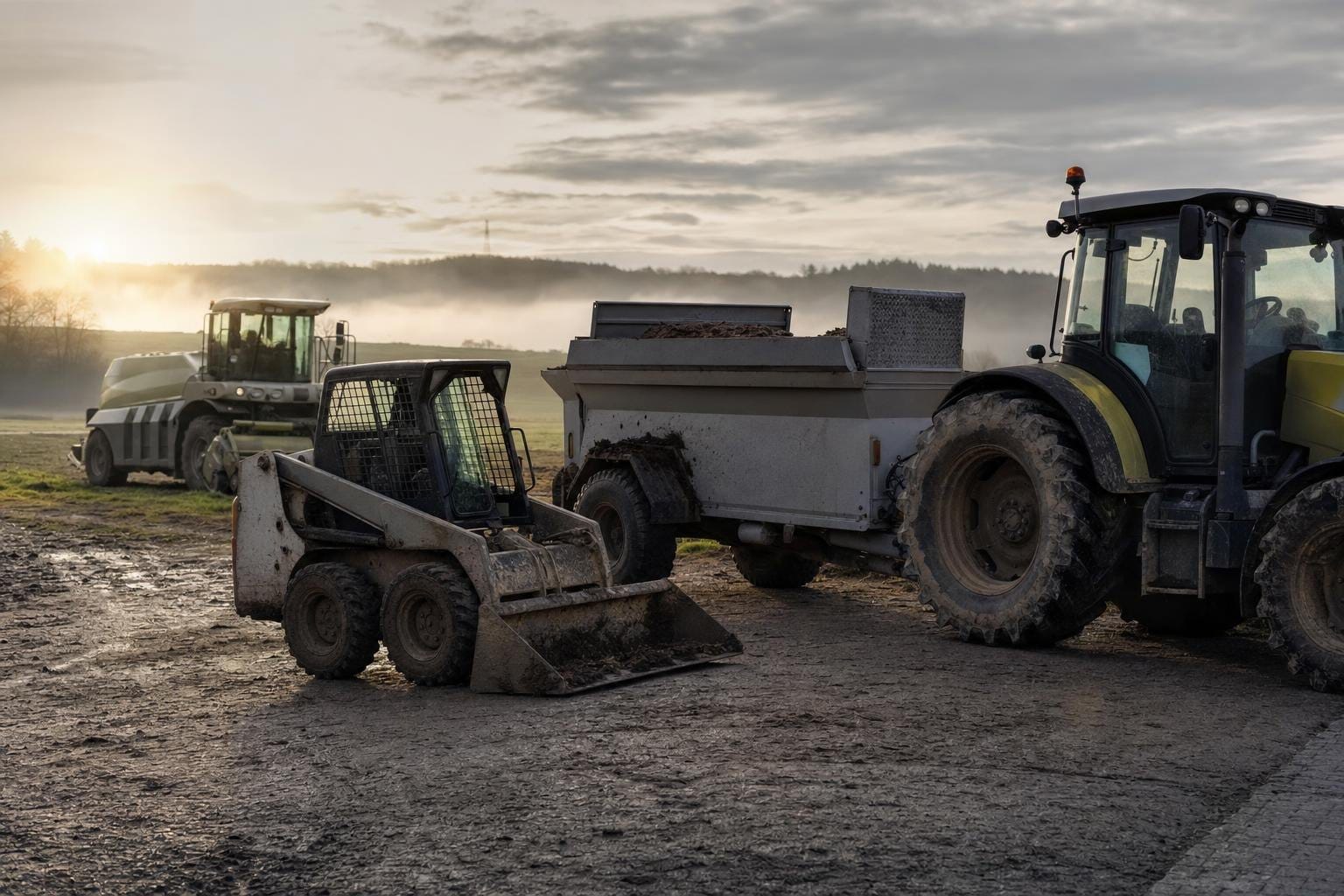
GIANTS Software has published its 10th and 11th fact sheets for Farming Simulator 19, continuing its weekly run of equipment details ahead of the November 20, 2018 release. This round covers a New Holland skid steer, a Valtra T Series tractor pulling a Kuhn manure spreader, and one of the most requested machines in the community, the Krone BiG M mower.
Earlier fact sheets covered:
- Sheets 1 to 3: AGCO IDEAL, Fendt 1100 MT, John Deere 8R and more
- Sheets 4 and 5: Case IH Quadtrac, Wilson Pacesetter, Vaderstad Seed Hawk seeder and more
- Sheets 6 and 7: Komatsu forestry equipment, MAN forestry truck and Steyr Profi CVT
- Sheets 8 and 9: Challenger MT800E, Case IH cotton harvester, Case IH Maxxum and Bednar cultivator
10A: New Holland L218 skid steer and Paladin high-dump bucket
Skid steers arrived in Farming Simulator 17 as small, affordable loaders for feeding animals, moving pallets and stacking bales. They are slow, so they work best parked in one part of the farm, near the cow enclosure for example, or carried on a trailer to wherever they are needed.
Farming Simulator 17 only had JCB skid steers. New Holland’s L218 adds a second brand. The Paladin high-dump bucket has its own hydraulics to tip its load, which makes it less likely to catch on the edge of a trailer, and it can handle nearly every material in the game. The fact sheet shows it loading manure into the Kuhn spreader from sheet 10B.
10B: Valtra T Series with a Kuhn SLC 141 manure spreader
This type of manure spreader has been thin on the ground in earlier games, and the mid-sized Kuhn SLC 141 suits a mid-sized operation. Spreading manure from the farm’s own livestock saves on bought fertiliser. With only standard or wide tyres available, it is best used before sowing to avoid crushing crops.
The Valtra T Series first appeared in Farming Simulator 17 with the AGCO line-up and earned a reputation as a flexible tractor with plenty of configuration. The fact sheet suggests that carries over: multiple wheel setups, several engine options, an optional front loader, and separate colour choices for the body and the rims.
11A: Krone BiG M 450 self-propelled mower
The Krone BiG M was in Farming Simulator 13 but missing from 15 and 17, where it only existed as a player-made mod. It appeared in the Gamescom gameplay trailer, and the fact sheet now gives the details. Its 9.9-metre (32-foot) working width is a little narrower than the Pöttinger triple-mower combination from Farming Simulator 17 (about 11.5 metres, or 38 feet), but it needs no separate tractor.
The BiG M can spread its cut wide or lay a swath (windrow) to the left, right or centre, so hay fields can be set up for a baler or loading wagon in one pass. At a working speed of 25 km/h (15 mph), it should clear even the largest fields quickly.
GIANTS releases a new set of fact sheets each Friday until launch.
How the yard machines work together
The three machines in this round belong to two separate jobs, and each makes more sense in context.
The skid steer and the spreader form a small loop around the cow barn. Animals bedded with straw produce manure, which piles up on the farm’s manure heap. The skid steer loads it into the Kuhn spreader, the Valtra takes it out to a field, and the field gets the same boost as a pass with bought fertiliser. Done regularly, the loop saves money and keeps the heap from filling. It is also a good use for an older or smaller tractor, since the spreader does not need much power.
The BiG M is the first step of a different chain: grass. A field of grass is mown, left to dry or turned with a tedder until it becomes hay, raked into windrows, and then baled or collected with a loading wagon. The BiG M’s ability to lay its cut straight into a windrow skips one of those steps when the grass is going for silage, which is why players wanted it back.
For a new farm, none of these machines is essential on day one. They pay off once a farm has animals and grassland to manage, which is usually after the first harvest or two.